Compare passenger vehicles比较乘用车型
Browse seat-count families before requesting a specification.先浏览不同座位数家族,再索取具体规格。
Continue here继续查看Buyer guide采购指南
A four-seat label can describe two very different vehicles. Compare seating direction, boarding, storage and route before choosing a passenger platform.同样写着四座,实际车辆可能完全不同。应先比较座椅朝向、上下车、储物和线路,再选乘用平台。
Decision 1决策 1
Begin with the busiest real trip, not the average one. A cart filled to nominal seating capacity may have little space for bags, luggage, tools or mobility aids.先看实际最繁忙的一趟,而不是平均情况。即使按标称座位坐满,也可能没有足够空间放球包、行李、工具或辅助设备。
Write two figures: seated passengers and the separate cargo volume. If items cannot be safely carried with those passengers, choose a different layout or a second vehicle.分别记录乘坐人数与货物体积。若无法安全同时运送,就应调整布局或另配车辆。
Decision 2决策 2
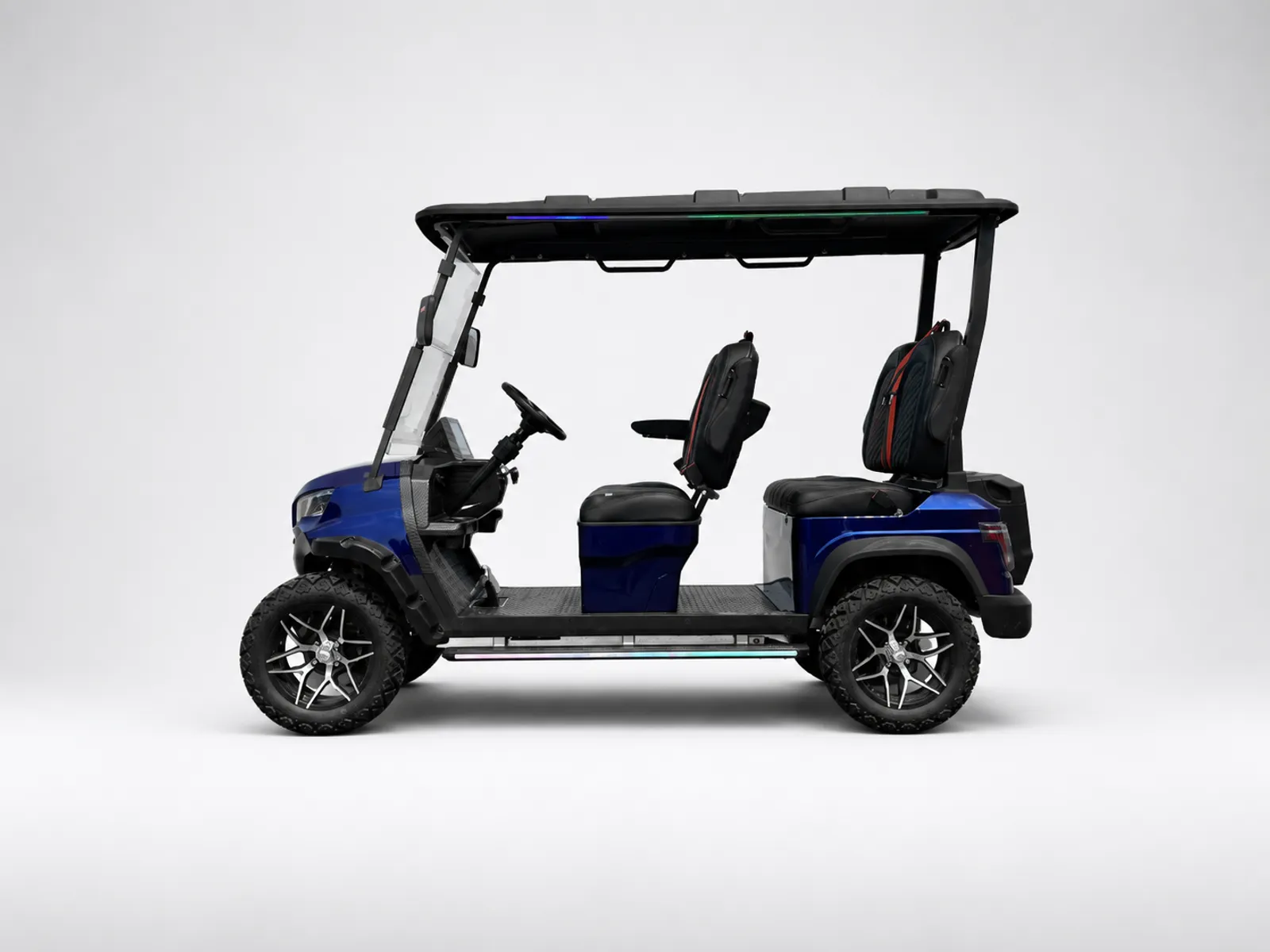
A 2+2 cart commonly places the rear two passengers facing backward. This can keep a compact overall form, but its boarding, view and rear storage use differ from a cart with two forward-facing rows.2+2 车型通常让后排两人面向车后,车身可能更紧凑,但上下车、视线和后部储物方式与两排全前向车型不同。
For hotel or campus shuttle duty, all-forward seating may suit a repeated route better. For mixed private use, a rear bench may offer a different balance. Ask for photos of both sides and dimensions of the exact build.酒店或园区固定线路可能更适合全前向座椅;私人混合用途则可能看重后向座椅的另一种平衡。应索取具体配置的双侧照片和尺寸。
Decision 3决策 3
Six- and eight-passenger carts carry more people per trip, but a longer vehicle needs more turning, parking and stop space. The operating route determines whether added seats improve throughput.六座和八座车每趟可载更多人,但较长车身需要更大转弯、停车和停靠空间。增加座位是否提升运力,取决于实际线路。
Request the exact vehicle length, turning requirement, loaded performance and charging assumptions. Where possible, test the chosen layout with real passengers and a realistic stop cycle.索取具体车长、转弯要求、载人性能及充电假设;条件允许时,按真实人数和站点循环试车。
Browse seat-count families before requesting a specification.先浏览不同座位数家族,再索取具体规格。
Continue here继续查看See the boarding and luggage questions for guest transport.查看宾客接送中的上下车与行李问题。
Continue here继续查看Discuss your project讨论采购需求
Send the relevant route, load, market and quantity details. We can compare vehicle families and identify which specification details still need confirmation.提供相关线路、载荷、目标市场和数量,我们可比较车型家族并找出仍需确认的规格。